


Online gambling – what to do?
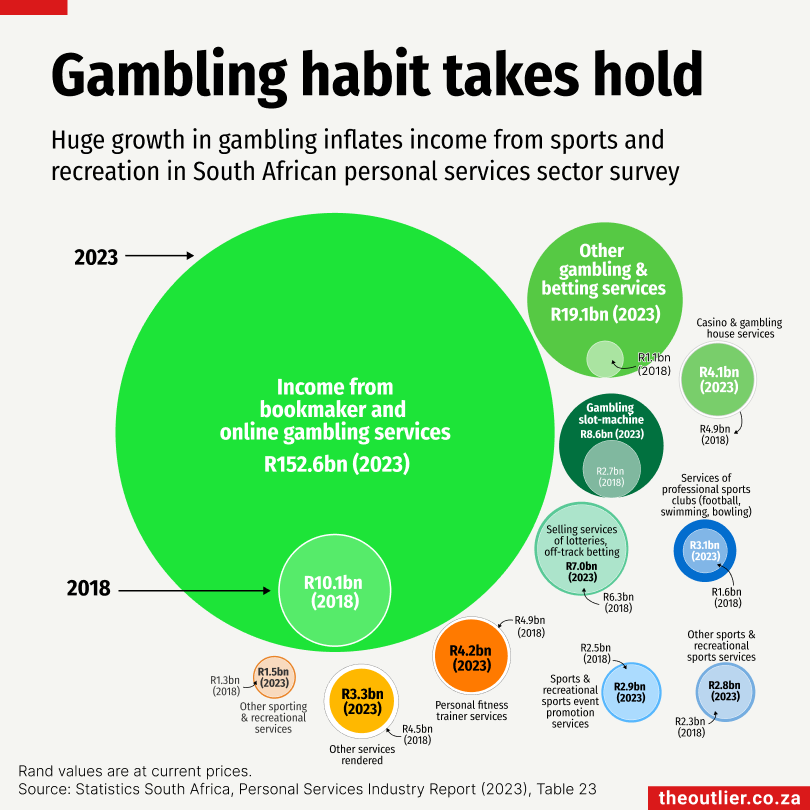
In the digital age, where smartphones are extensions of our hands and the internet promises endless opportunities, few trends are as alarming as the explosive growth of online gambling in South Africa. What began as a niche activity has ballooned into a multi-billion-rand industry, reshaping household budgets, economic priorities, and even our national psyche. As the Internet Society of South Africa (ISOC-SA), we champion an open, accessible, and safe internet. But when that same connectivity fuels addictive behaviours and financial ruin, it’s time to hit pause and ask: What are we doing about it?
Recent data paints a stark picture. According to Statistics South Africa’s (Stats SA) latest report on the personal services industry, income from gambling and betting services skyrocketed from R25 billion in 2018 to a staggering R191 billion in 2023. Within this surge, bookmaker and online gambling services stand out as the runaway leaders, generating R152.6 billion in 2023 alone—up from just R10.1 billion five years prior. This isn’t mere growth; it’s a fifteen-fold explosion, outpacing every other activity in the sector, from health to education. Meanwhile, traditional casinos are in decline, with a 3.3% annual drop, underscoring how the internet has democratised—and dangerously amplified—gambling access.
The National Gambling Board’s figures corroborate this digital shift. Gross gambling revenue hit R59.3 billion in the 2023/24 financial year, a 25.7% jump from the previous year, largely driven by betting. Betting, once a mere 10% of the market, overtook casinos during the COVID-19 lockdowns and hasn’t looked back. Today, it’s the dominant force, with online platforms making it as easy as a swipe to place a bet on a soccer match or a horse race.
The Human Cost: Beyond the Numbers
These aren’t abstract figures—they represent real lives unravelled. Household spending on gambling now claims 1.6% of the total consumer price index (CPI) basket, ranking it 12th highest, just behind beer. In the recreation, sport, and culture category, it devours over half of all spending, dwarfing gym fees at a mere 5.9%. For many South Africans grappling with unemployment, food insecurity, and economic inequality, this “entertainment” comes at the expense of essentials. The 2021 PIRLS survey already revealed that 80% of Grade 4 learners can’t read for meaning—imagine diverting library funds or family budgets to fuel this boom instead.
Online gambling’s siren call is particularly insidious because it’s always on, always accessible. No need for a trip to a casino; just an app download and a proxy like a cellphone number via services such as PayShap, which ironically processed 44.8 million transactions in August 2025. This seamless integration with everyday digital payments—now involving 13 banks—lowers barriers even further, turning impulse into instant regret. We’ve seen stories of families losing homes, addictions spiralling into debt, and communities fractured by the lure of quick wins that rarely materialise.
From an internet governance perspective, this growth exposes deeper flaws. Platforms often operate with lax oversight, harvesting user data to personalise temptations and deploying algorithms that prey on vulnerability. Privacy breaches, targeted ads, and unregulated fintech integrations amplify risks, especially in a country where digital literacy lags and cyber threats abound.
What Can We Do? A Call to Collective Action
The good news? We have the tools to course-correct. As ISOC-SA, we urge stakeholders to act decisively:
Online gambling isn’t going away—it’s woven into our connected world. But unchecked growth risks turning opportunity into exploitation. South Africa deserves an internet that uplifts, not one that preys. Join ISOC-SA in demanding better: share your stories, sign our petition for reform, and let’s build a safer digital future together.
For more on internet policy and advocacy, visit isoc.org.za. References: Stats SA Personal Services Industry Report (2023) and The Outlier’s “This Week in Charts” (12 September 2025).